07 · tool · Morning research journal
Morning research
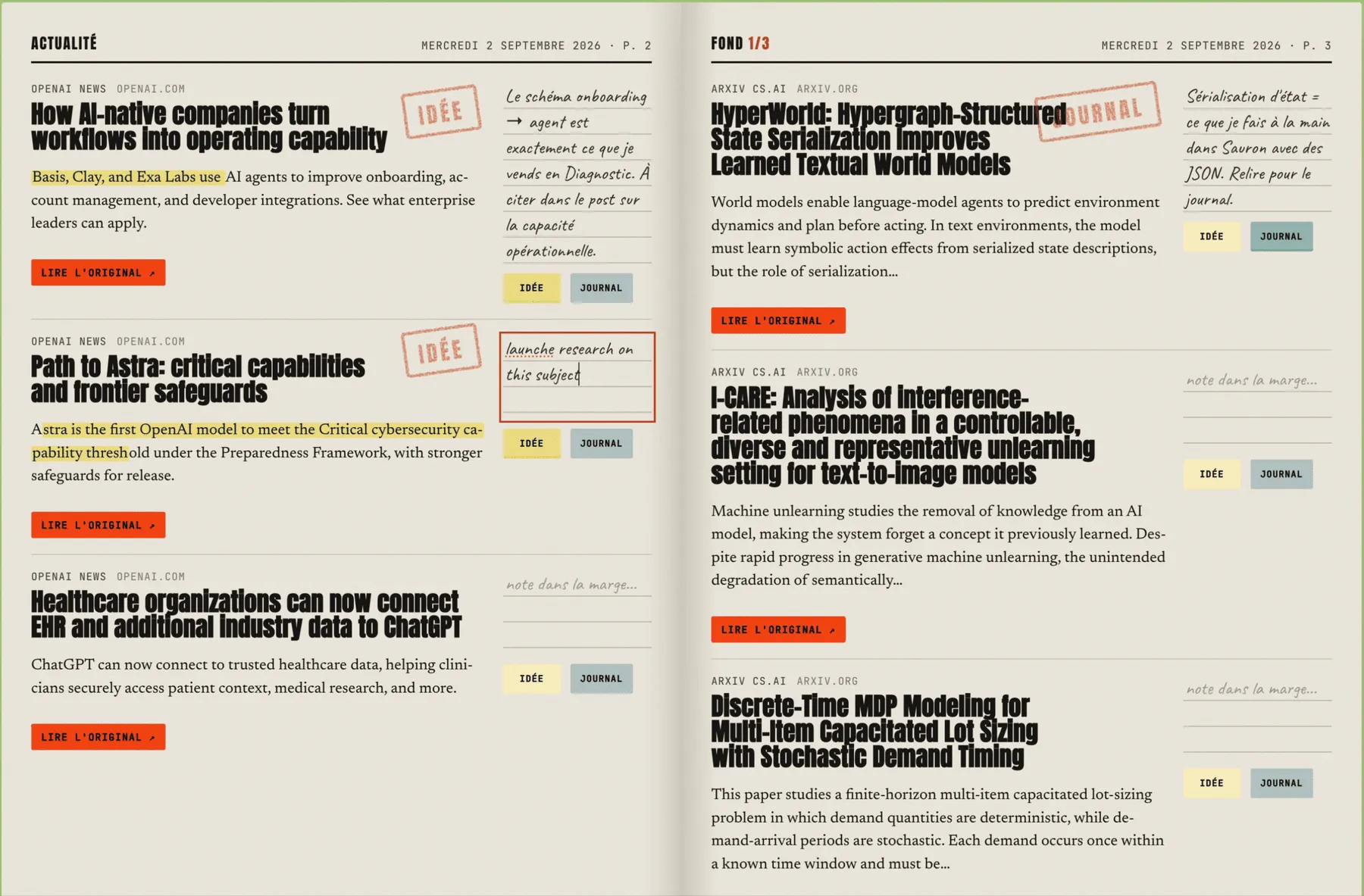
A year of pipelines fetched research every night, and nothing ever landed in your hands in the morning. And what you think while reading goes nowhere: nothing comes out of the reading.
Primary research, fetched overnight from sources you chose, delivered as a paper journal you can annotate. Every note comes back out.
- Sources you edit by hand, no influencers
- A twenty-minute read, never a feed
- Every margin note lands somewhere
It runs on my own machine at half past six every morning. The note in the vault is the guarantee; the mail is only the convenience.
01
What the tool does today
Two arms fetch overnight, without a single key: the named primary sources of a registry you edit by hand, and the academic arm on the two open paper indexes. The morning brings one dated note, one mail, and a paper journal to page through.
Sources are yours, not the machine’s
Everything fetched comes from one plain text registry you edit by hand. Add a line, the next run takes it. The rule written at its top: primary research. A paper, a lab, an organisation publishing its own work. No creator commenting on someone else’s.
A journal, not a feed
Six rails, in this order: the lead, news, depth, papers, briefs, dossiers. A twenty-minute read, about ten pages: three news items, eight in depth, four papers. What does not fit becomes a brief, title only, and is never dropped.
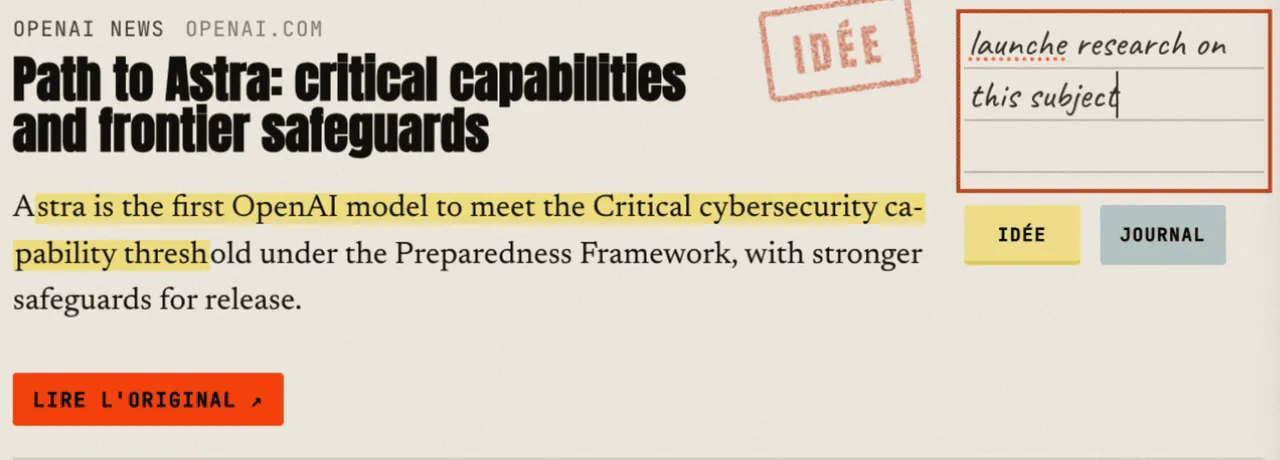
Read with a pencil
Highlight a sentence, write in the margin, stamp it. Two stamps: idea, and journal. The page grows with its text, because a journal never cuts a sentence at the edge.
Nothing stays in the reading
Every annotated row is collected: a verbatim block in the journal of the day you wrote it, an idea card on the content board for every idea stamp, and a research queue for every subject you asked to dig into. A row is marked handled only after the journal write is re-read from disk.
Broken is named, not hidden
A source that errors is named in the note. « Nothing today » and « the fetch broke » must never look alike: that is the failure this whole job exists to end.
Dossiers, checked by the script
For every subject you stamped, one agent writes a sourced dossier overnight, and the output is kept only if it holds: at least three sources, every one with a reference. The check is done by the script, never trusted from the agent that wrote the file. Three dossiers a run, one retry, then parked with its reason.
02
How it works
One path from the overnight fetch to your pencil and back: fetch, select, deliver, annotate, collect, dossier. Selection uses no model at all.
- 01
Fetch
Overnight, the registry’s feeds and the two open paper indexes, without a single key.
- 02
Select
Deterministic, zero model: the lead, then the caps per rail, the rest as briefs. Every item comes out exactly once.
- 03
Deliver
A dated note in the vault, always. A mail to your phone. A dead mail path is a warning, never a silent loss.
- 04
Annotate
Note, highlight, stamp, on paper you page through.
- 05
Collect
Journal, idea card, research queue. Handled only once the write is re-read from disk.
- 06
Dossier
One agent per subject, validated by the script, back in tomorrow’s edition.